


Venerated through the millennia as Purushottama Kshetra, Srikshetra, Nilachala, and Sankha Kshetra, Puri is one of humanity’s most sacred and ancient living pilgrimage capitals. Nestled along the eastern shoreline of Odisha on the Bay of Bengal, it is revered as the divine eastern pillar of the holy Char Dham of Sanatana Dharma.
Unlike cities whose monuments survive only as silent relics of bygone eras, Puri’s two-thousand-year heritage thrives as a vibrant, breathing reality. Here, prehistoric tribal Sabara veneration seamlessly blends with profound Advaita philosophy, soaring 12th-century Kalinga temple architecture, maritime voyages across ancient Southeast Asia, and the monumental annual Ratha Yatra — the world’s oldest continuously celebrated festival of chariots.

Mentioned in Rigvedic hymns and detailed in the Skanda, Brahma, and Narada Puranas.
214-foot Pancharatha sanctum commissioned by Eastern Ganga Emperor Chodaganga Deva.
Chosen by Adi Shankaracharya (~810 CE) to establish the revered Govardhana Matha.
Over a millennium of unbroken Ratha Yatra, Mahaprasad culinary feasts, and Nabakalebara.
The spiritual inception of Puri is chronicled in the Purushottama Kshetra Mahatmya of the Skanda Purana. It recounts an extraordinary journey of faith connecting ancient royalty with indigenous forest dwellers:
In the Satya Yuga, King Indradyumna of Avanti (modern Malwa) yearned to behold the supreme manifestation of Lord Vishnu. Hearing whispers of a miraculous sapphire deity worshipped in deep coastal jungles, he dispatched emissaries in all four directions. His royal priest's brother, the scholar Vidyapati, travelled east into the dense wilderness of Nilachala.
In the hills of Nilachala, Vidyapati discovered that the local tribal Sabara chieftain, Vishwavasu, worshipped Lord Vishnu as Nila Madhava inside a hidden cave. Winning Vishwavasu's trust, Vidyapati was led blindfolded to the cave. Cleverly, Vidyapati dropped mustard seeds along the path, which sprouted after rains, marking the secret trail with golden blooms.
When King Indradyumna arrived to venerate the sapphire deity, Nila Madhava miraculously vanished beneath the golden sands, leaving a divine oracle: the Lord would manifest anew as sacred fragrant neem wood (Daru Brahma) bearing Vishnu's divine emblems, which would wash ashore at the sacred ocean beach of Chakratirtha.
According to temple tradition, an elderly celestial carpenter named Ananta Maharana (Lord Vishwakarma in disguise) offered to carve the Daru Brahma into divine idols on condition of complete solitude for 21 days. Overcome by anxiety when all sound ceased, Queen Gundicha had the doors opened on the fourteenth day. Finding the idols without fully formed hands or feet, the king was crestfallen. However, Lord Brahma consecrated the deities, explaining their profound esoteric symbolism: the Supreme Lord has no finite human limbs, yet his outstretched arms embrace all beings, and his large round eyes (Chaka Dola) watch over the universe with unconditional compassion.
To this day, this legend is immortalized in temple rituals: the direct descendants of the tribal king Vishwavasu, known as the Daitapati Sevayats, serve as the close family of Lord Jagannath, holding exclusive custody of the deities during the annual Ratha Yatra and the sacred cycle of Nabakalebara (divine rebirth).
Trace Puri's momentous transition through the centuries — from early Vedic references to imperial Kalinga golden ages, spiritual movements, colonial times, and modern heritage:
The earliest literary allusion to a wooden deity floating on the eastern sea appears in the Rigveda (10.155.3). Ancient Buddhist traditions identify Puri with Dantapura, where the sacred tooth relic of Gautama Buddha was revered before being taken to Sri Lanka. In the Mahabharata’s Vanaparva, the Pandavas are described visiting the holy sea coast of Kalinga and performing sacred rites.
The visionary philosopher Adi Shankaracharya arrives in Puri during his pan-Indian journey to consolidate Sanatana Dharma. Choosing Puri as the eastern cardinal seat (Purva Amnaya Pitham) associated with the Rigveda and the mahavakya "Prajnanam Brahma", he establishes the historic Govardhana Matha, enshrining Puri as one of India's four sacred Char Dhams.
Emperor Anantavarman Chodaganga Deva commissions the colossal Shree Jagannath Temple upon the Nilagiri mound, uniting coastal and inland Kalinga. Later, Emperor Anangabhima Deva III completes the sanctum, builds the Natamandira and Bhogamandapa, and dramatically surrenders his royal sovereignty to Lord Jagannath, ruling purely as the Lord's humble royal servant (Raut).
Emperor Kapilendra Deva establishes an empire extending from the Ganges to the Kaveri, declaring himself the foremost servitor (Adya Sevaka) of Lord Jagannath. His successor, Purushottama Deva, wins the legendary Kanchi-Kaveri expedition. This era witnesses the flourishing of the famous Panchasakha saints (Balarama Dasa, Jagannatha Dasa, Achyutananda, Ananta, Jasobanta), who translate sacred scriptures into colloquial Odia.
In 1506 CE, Guru Nanak Dev Ji visits the Jagannath Temple and composes the immortal cosmic hymn of adoration ("Gagan mai thaal...") at Bauli Matha. In 1510 CE, Sri Chaitanya Mahaprabhu arrives in Puri, spending his final 24 ecstatic years at the Gambhira (Radhakanta Matha), initiating a revolutionary wave of Gaudiya Vaishnavism and congregational Harinam Sankirtan across eastern India.
Following periods of instability after Kalapahad's invasion in 1568, the Marathas take control of Odisha in 1751. They restore safety to pilgrim trunk routes, institute permanent financial endowments for the temple's kitchen and daily rituals, renovate the historic 13th-century Atharanala 18-arch laterite bridge, and construct dedicated pilgrim rest houses.
The British East India Company assumes administration in 1803, passing special regulations to maintain traditional temple management by the Gajapati Maharaja of Khurda. In 1902, the Bengal Nagpur Railway (BNR) opens direct train access to Puri, establishing the coastal town as eastern India's favorite beachfront sanatorium and health resort. Today, Puri shines on the world stage with its Blue Flag certified Golden Beach, world-renowned sand art, and the newly developed Srimandir Parikrama Heritage Corridor.
Three imperial royal dynasties played decisive historical roles in constructing, nurturing, defending, and immortalizing the sacred complex of Puri:
The Eastern Gangas transformed Puri from a regional sacred shrine into an imperial pan-Indian pilgrimage centre. Emperor Anantavarman Chodaganga Deva commenced the monumental 214-foot Vimana in 1135 CE, while Anangabhima Deva III organized the hereditary 36 groups of temple servitors (Chhatisa Nijoga).
Founding emperor Kapilendra Deva inscribed on temple walls that the kingdom belonged entirely to Jagannath. His son, Purushottama Deva, immortalized the royal Chhera Pahanra ritual, proving that before the Lord of the Universe, emperors and commoners stand as equal servants.
When Afghan commander Kalapahad raided Odisha in 1568, courageous servitors concealed the sacred divine substance (Brahma Padartha). Raja Ramachandra Deva I of Khurda recovered the sacred relics from secret islands in Chilika Lake, re-consecrated the deities on the Ratnavedi in 1575 CE, and earned the eternal title of "Dwitiya Indradyumna".
Over the centuries, Puri became India’s spiritual parliament. Every major philosophical school and mystical path sought the blessings of Lord Jagannath, establishing over 752 monastic monasteries (Mathas) that provided philosophical discourse, Sanskrit learning, and free shelter to weary pilgrims:
Established by Adi Shankaracharya as the supreme eastern monastic seat of Sanatana Dharma. It preserves the ancient traditions of the Rigveda and provides spiritual guidance to the hereditary Gajapati kings and temple committees.
Sri Ramanujacharya visited Puri in the early 12th century, establishing the expansive Emar Matha and systematizing Vaishnavite rituals, evening decorative garbs (Vesha), and ceremonial flower garland offerings.
Sri Chaitanya Mahaprabhu spent 24 years in Puri residing at the Gambhira (Radhakanta Matha). His divine ecstasy and mass congregational Harinam Sankirtan transformed the cultural and devotional landscape of Odisha and Bengal forever.
During his Udasis (travels), Guru Nanak Dev Ji sat near the sea at Swargadwar. Deeply inspired by the universal divinity of Lord Jagannath, he composed the revered Aarti "Gagan mai thaal, ravi-chand deepak bane..." now enshrined in the Guru Granth Sahib.
Great mystic poet Sant Kabir visited Puri to champion devotion that transcends social distinctions and religious dogmas. The Kabir Chaura Matha near Swargadwar preserves his legacy of universal brotherhood and love.
In 1903, Swami Sri Yukteswar Giri founded the Karar Ashram on Swargadwar Road to teach scientific meditation and Kriya Yoga. Here, he trained his world-famous disciple Paramahansa Yogananda, author of Autobiography of a Yogi.
Ancient Tantric and Puranic treatises describe Puri's physical and spiritual geography as an enormous divine Conch Shell (Sankha), one of Lord Vishnu's four celestial emblems:
The sacred conch extends across ten miles along the shore of the Bay of Bengal, with its narrow tip submerged in the sea near the temple of Lokanath, and its broad mouth facing northeast towards the Bilweswara temple.
At the very navel and spiritual epicenter of the conch lies the Shree Jagannath Temple, perched upon the legendary hillock called Nilagiri (The Blue Mountain). Surrounding this cosmic center are eight Shiva lingams (Ashta Sambhus) and eight forms of Goddess Durga (Ashta Chandi) acting as divine protectors of the holy perimeter.
Before entering the inner sanctum of the Lord, tradition prescribes taking ritual ablutions across the Pancha Tirtha (Five Sacred Waters) to wash away worldly attachments:

Formed by King Indradyumna’s thousands of sacred horse-sacrifices; home to centuries-old tortoises.
The sacred spring located inside the temple inner enclosure next to the Kalpavriksha banyan tree.
Ancient holy tank where Sage Markandeya received divine vision; guarded by an 8th-century Shiva temple.
Underground freshwater spring tank in southern Puri believed to be filled by the celestial Ganga river.
The sacred ocean along Puri beach, revered for holy dawn snana and offering prayers to the Sun God.

Long before Puri was celebrated primarily as a railway retreat, it was an illustrious international maritime seaport. Known to classical Greco-Roman geographers and documented by 7th-century Chinese pilgrim Xuanzang (Hiuen Tsang) as Charitrapura (Che-li-ta-lo), Puri served as a major naval hub.
The brave maritime merchant princes of Kalinga, known as Sadhabas, sailed in huge wooden sea vessels called Boitas across the Bay of Bengal to Ceylon (Sri Lanka), Java, Sumatra, Bali, and Borneo. They traded fine Odia textiles, camphor, spices, and precious gems, establishing deep cultural ties that introduced Kalinga temple motifs to Southeast Asia.
This maritime courage is celebrated every year during Boita Bandana on Kartika Purnima, when thousands gather at sunrise on Puri Beach to float glowing miniature paper and bark boats into the ocean.

Puri's greatest distinction is that its heritage is not confined to textbooks — it unfolds live in magnificent spectacles. The annual Ratha Yatra (Car Festival) sees millions gather along the Grand Road (Bada Danda) to pull three colossal newly crafted wooden chariots (Nandighosa, Taladhwaja, and Darpadalana) carrying Lord Jagannath, Balabhadra, and Subhadra to the Gundicha Temple.
Every 8 to 19 years, when a double month of Ashadha occurs, Puri witnesses the enigmatic ceremony of Nabakalebara (The Divine Rebirth). In this sacred ritual, the mysterious Brahma Padartha is secretly transferred from the old wooden deities into newly carved idols of sacred neem wood in complete darkness.
Complementing these festivals is the monumental temple kitchen preparing Mahaprasad across 56 food varieties in earthen pots over firewood, sustaining tens of thousands daily in the legendary Ananda Bazaar.
Step back in time by exploring these six iconic historical landmarks located within easy reach of Puri Holiday Resort:
The 12th-century epicenter of Sanatana Dharma, featuring the 214-foot Vimana, the towering 16-sided Aruna Stambha monolithic pillar, Anandabazar, and four majestic gates (Singhadwara, Ashwadwara, Vyaghradwara, Hastidwara).
Known as the birthplace of Lord Jagannath and the divine summer residence where the deities reside for seven days during Ratha Yatra amidst serene walled gardens and tranquil courtyard mandapas.
The monumental 13th-century laterite stone bridge spanning the Madhupur stream. Built during the Ganga dynasty, this 18-arch masterpiece has served as the historic grand gateway into Puri for centuries of pilgrims.
A sprawling 14th-century royal lake with an island pavilion (Chandan Mandapa) at its center. Every summer, it hosts the 42-day Chandan Yatra featuring divine evening swan boat rides (Chapa Khela).
The sacred protector of Puri. The ancient Shiva lingam remains completely submerged under natural spring water throughout the year, accessible only on the holy day of Pankoddhar Ekadashi.
A UNESCO-recognized artisanal village where every family preserves centuries-old heritage crafts: exquisite Pattachitra cloth paintings, palm-leaf etchings, tusser silk art, and traditional Gotipua classical dance.
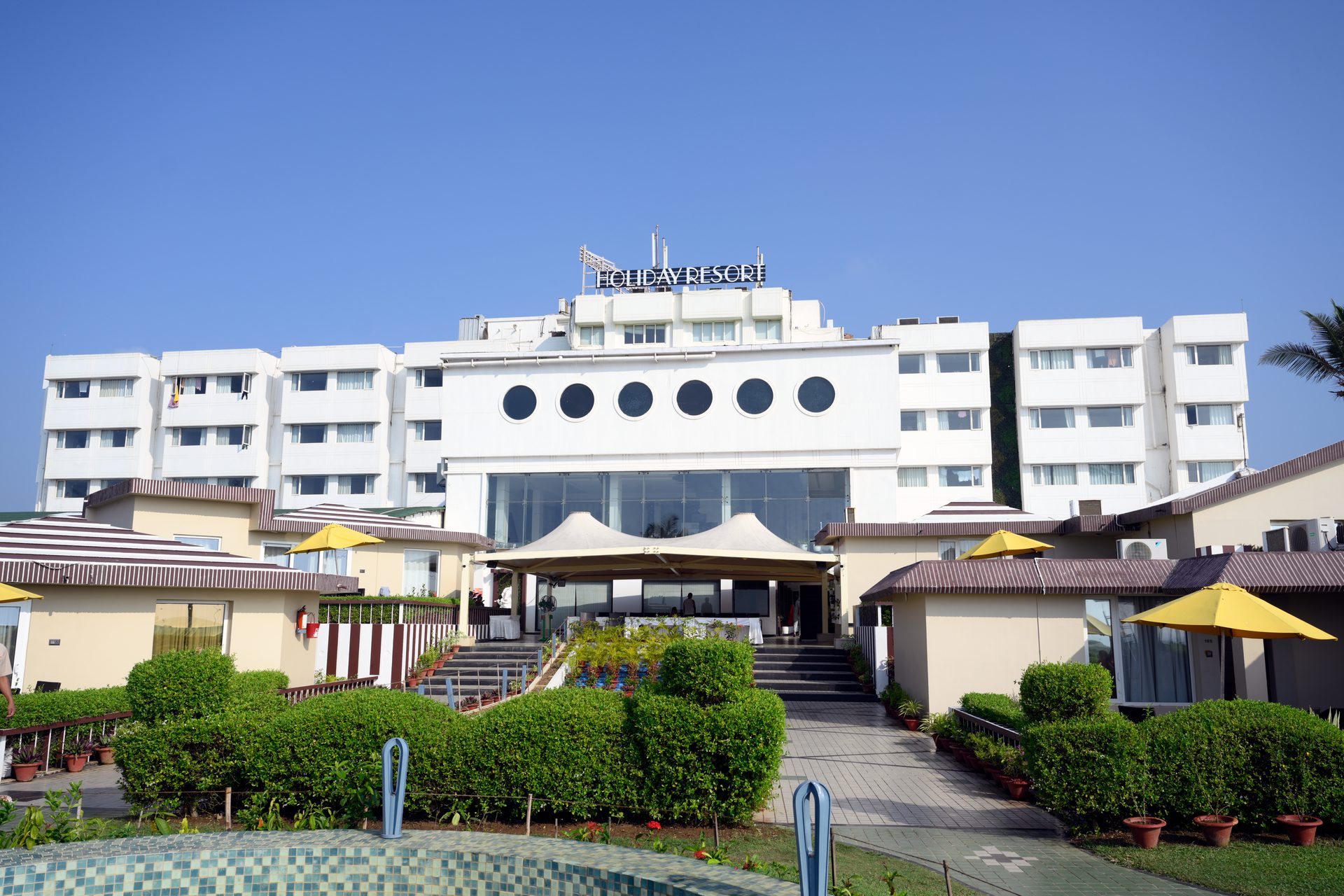
Nestled along historic Chakratirtha (C.T.) Road, Puri Holiday Resort stands upon one of the most spiritually significant stretches of coastline in Odisha. Chakratirtha marks the sacred beach where Lord Vishnu’s Sudarshana Chakra touched the shore, and where the divine Daru Brahma tree log originally washed ashore in antiquity.
For over four decades, Puri Holiday Resort has welcomed discerning pilgrims, families, and global travellers exploring Srikshetra’s rich heritage. Just 200 metres from the serene Golden Beach and only a 10-minute auto ride to Shree Jagannath Temple, the resort blends 40+ years of warm hospitality with modern amenities: two swimming pools, a wellness spa, oceanfront lawns, and authentic Odia dining at Holiday Palms and Fusion.
Explore expert answers to the most common historical and cultural questions asked by pilgrims and heritage travelers:

PLEASE PROVIDE GOVT. APPROVED PHOTO IDENTITY CARD OF ALL ADULT PERSON AT THE TIME OF CHECKING IN